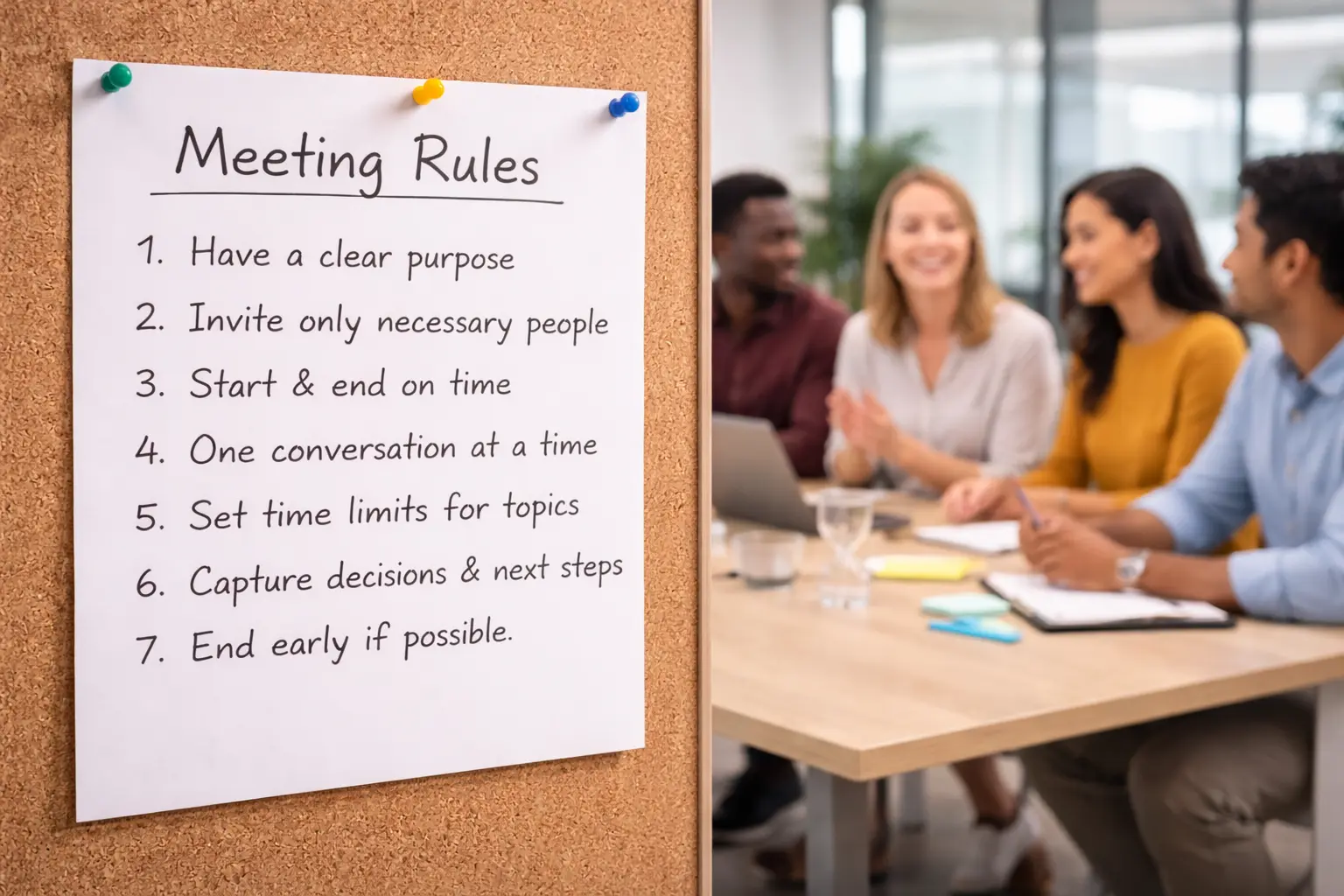
How to End Meetings on Time
Ending meetings on time sounds simple, yet it's one of the most common challenges in modern work culture. Meetings often start late, drift off topic, and quietly run over — stealing focus, energy, and trust.
The good news: ending meetings on time is not about being rude or cutting discussions short. It's about structure, clarity, and respect for everyone's time.
Why Meetings Rarely End on Time
Before fixing the problem, it helps to understand why meetings tend to overrun. In most cases, it's not because people don't care — it's because time is invisible during conversations.
- No clear end time or agenda
- Too many topics for the allotted time
- Side discussions that slowly take over
- Lack of ownership for keeping track of time
When no one feels responsible for the clock, meetings naturally expand. Discussions feel productive in the moment, even if they drift far beyond what was planned.
Start With a Clear End Time
One of the simplest yet most effective habits is to explicitly state when the meeting will end. Not just in the calendar invite, but verbally at the beginning of the meeting.
Saying "We'll wrap up at 10:30" creates a shared expectation. It sets a boundary that everyone can align with — and it subtly changes how people communicate.
When participants know there's a fixed end, they tend to:
- Speak more concisely
- Prioritize important points
- Postpone non-essential discussions
Timebox the Agenda
An agenda alone is not enough. What really makes a difference is assigning time limits to each topic.
Instead of listing:
"Project updates, roadmap discussion, open questions"
Try:
- Project updates (10 minutes)
- Roadmap discussion (15 minutes)
- Open questions (5 minutes)
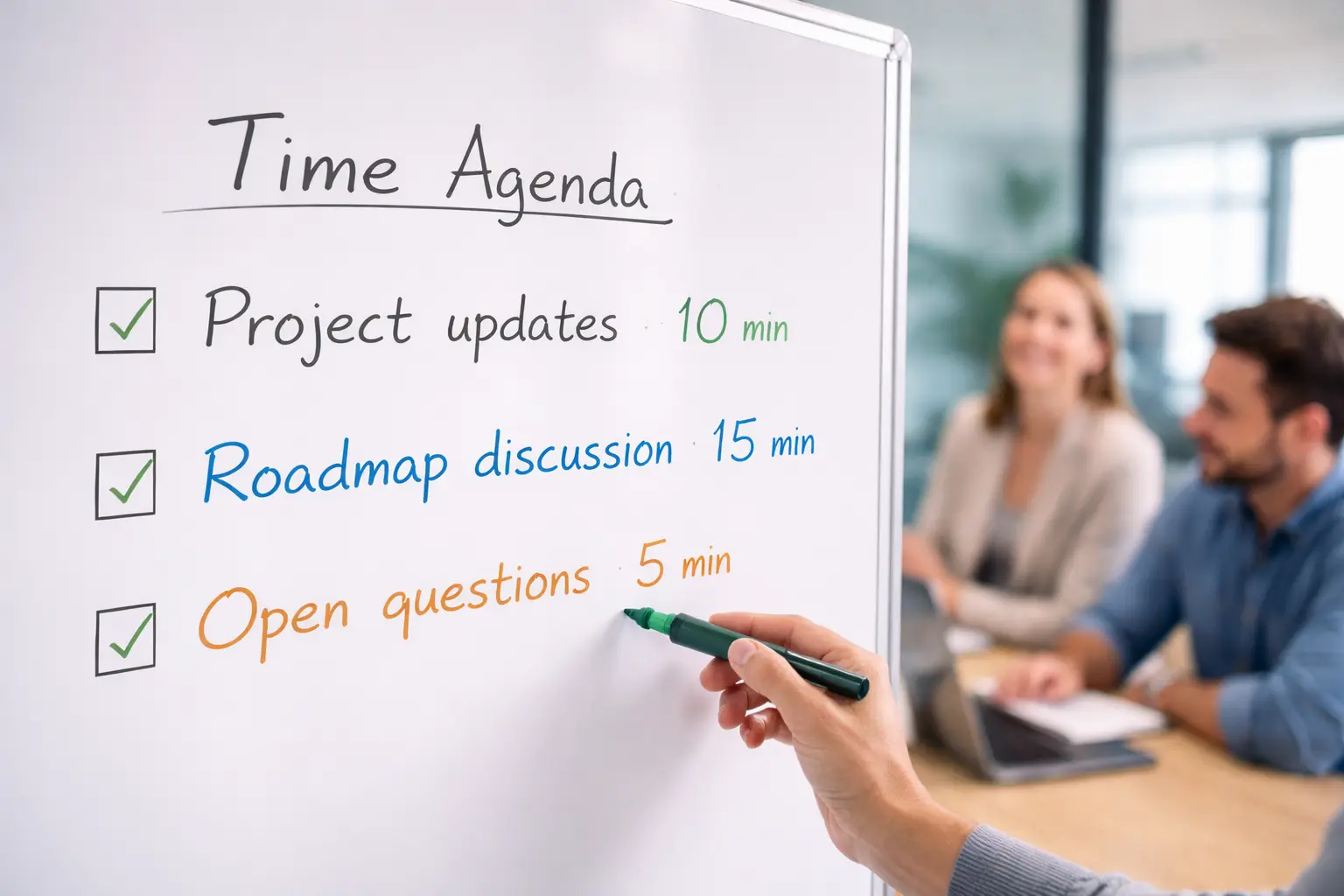
This creates a sense of pacing. Even if a topic runs slightly over, the team is aware of the trade-off — and can consciously decide what to cut or move to another meeting.
Make Time Visible
One major reason meetings overrun is that time is abstract. People are deeply engaged in discussion and simply lose track of it.
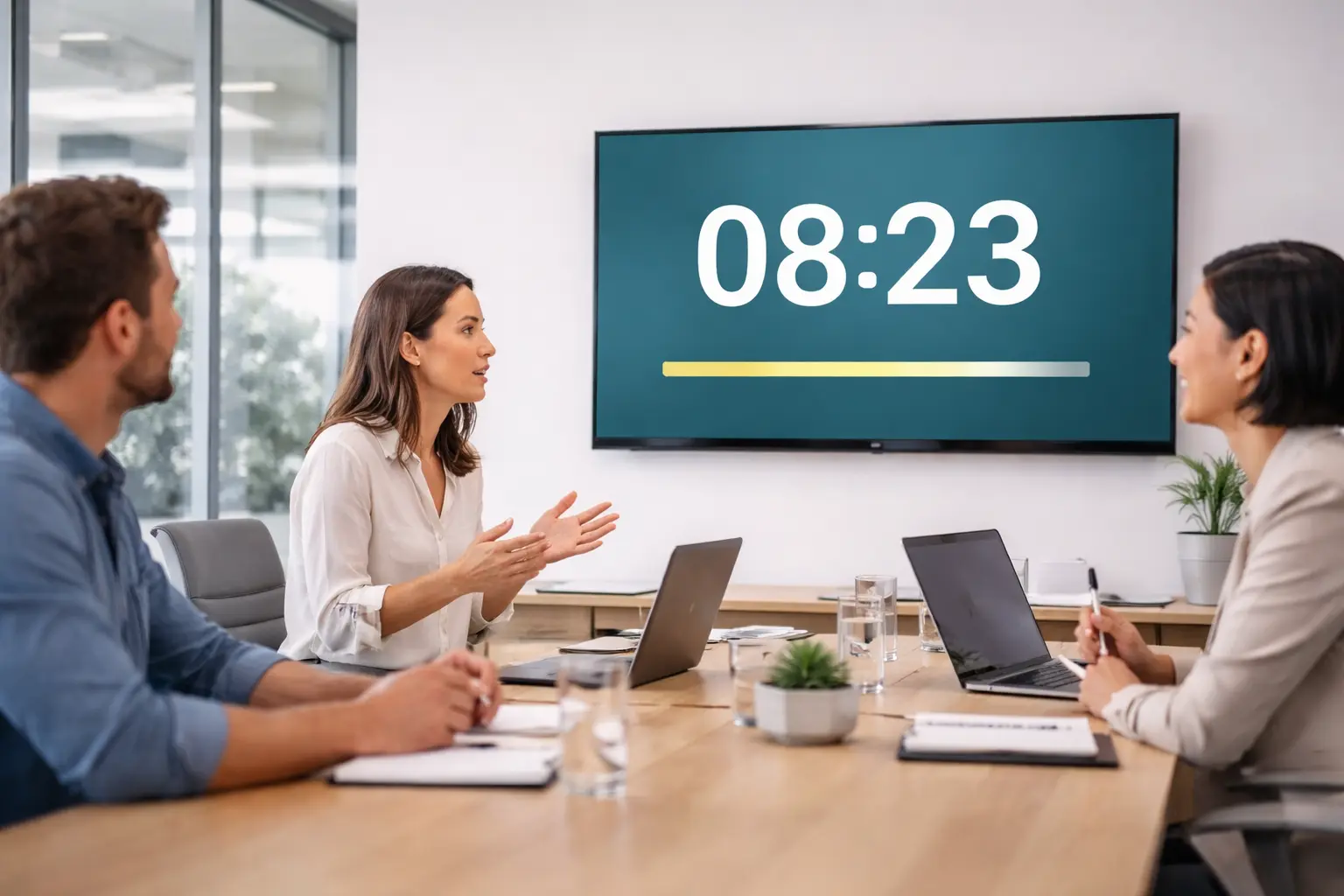
Making time visible changes behavior without interrupting the flow of conversation. A simple visual timer can act as a silent moderator, reminding everyone how much time is left.
Unlike verbal reminders, visual cues don't feel confrontational. They create awareness rather than pressure.
Assign a Timekeeper
In longer or more complex meetings, it can help to explicitly assign a timekeeper. This doesn't need to be the meeting host.
The role is simple:
- Keep an eye on the clock
- Gently signal when a topic is running long
- Remind the group of the planned end time
Rotating this role can also increase team awareness around time management and reduce the awkwardness of speaking up.
Normalize Parking Lot Topics
Some discussions are valuable — just not for the current meeting. Instead of letting them derail the agenda, create a "parking lot" for topics that need more time.
Writing these down acknowledges their importance without sacrificing the meeting's structure. It also builds trust, because people feel heard rather than shut down.
End on Time, Even If It Feels Uncomfortable
The first few times you end a meeting exactly on time, it may feel awkward. Someone will be mid-sentence. A discussion may feel unfinished.
That's okay.
Ending on time sends a strong signal: time matters here. Over time, teams adapt. Discussions become sharper, meetings become shorter, and follow-up conversations happen in more appropriate formats.
Build a Culture of Time Respect
Ending meetings on time is not about rigid rules. It's about respect — for people's focus, energy, and commitments outside the meeting room.
When meetings consistently end on time, participants feel more willing to engage fully, knowing their time won't be taken for granted.